Studio museum in harlem digital signage
Status: Completed
Team: Radnyee Joshi, Christopher Smith, Chris Lum
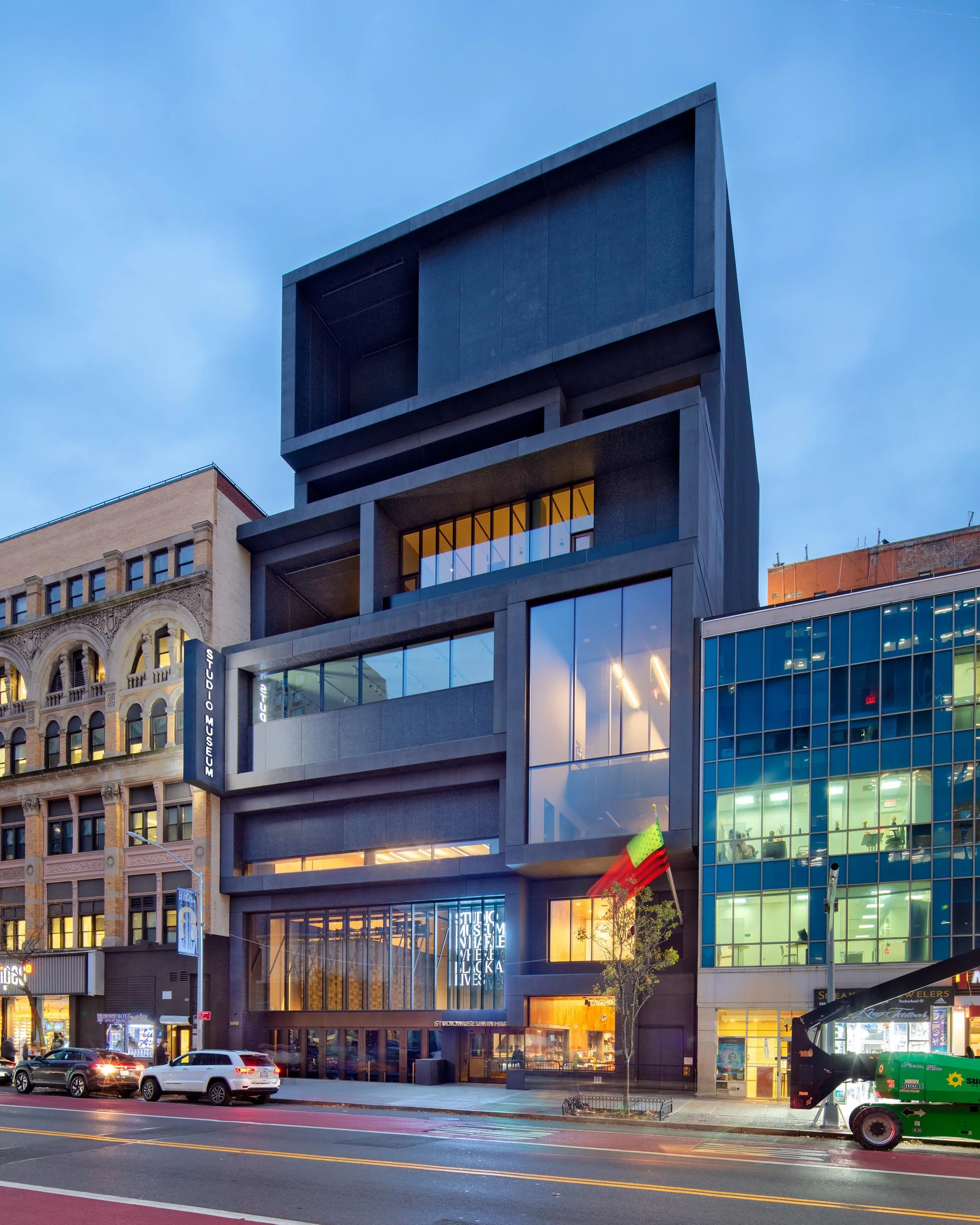
For more than five decades, the Studio Museum in Harlem has been a vital home for artists of African descent. Founded in 1968, it has championed creativity, dialogue, and visibility for Black artists while shaping conversations in New York City and beyond.
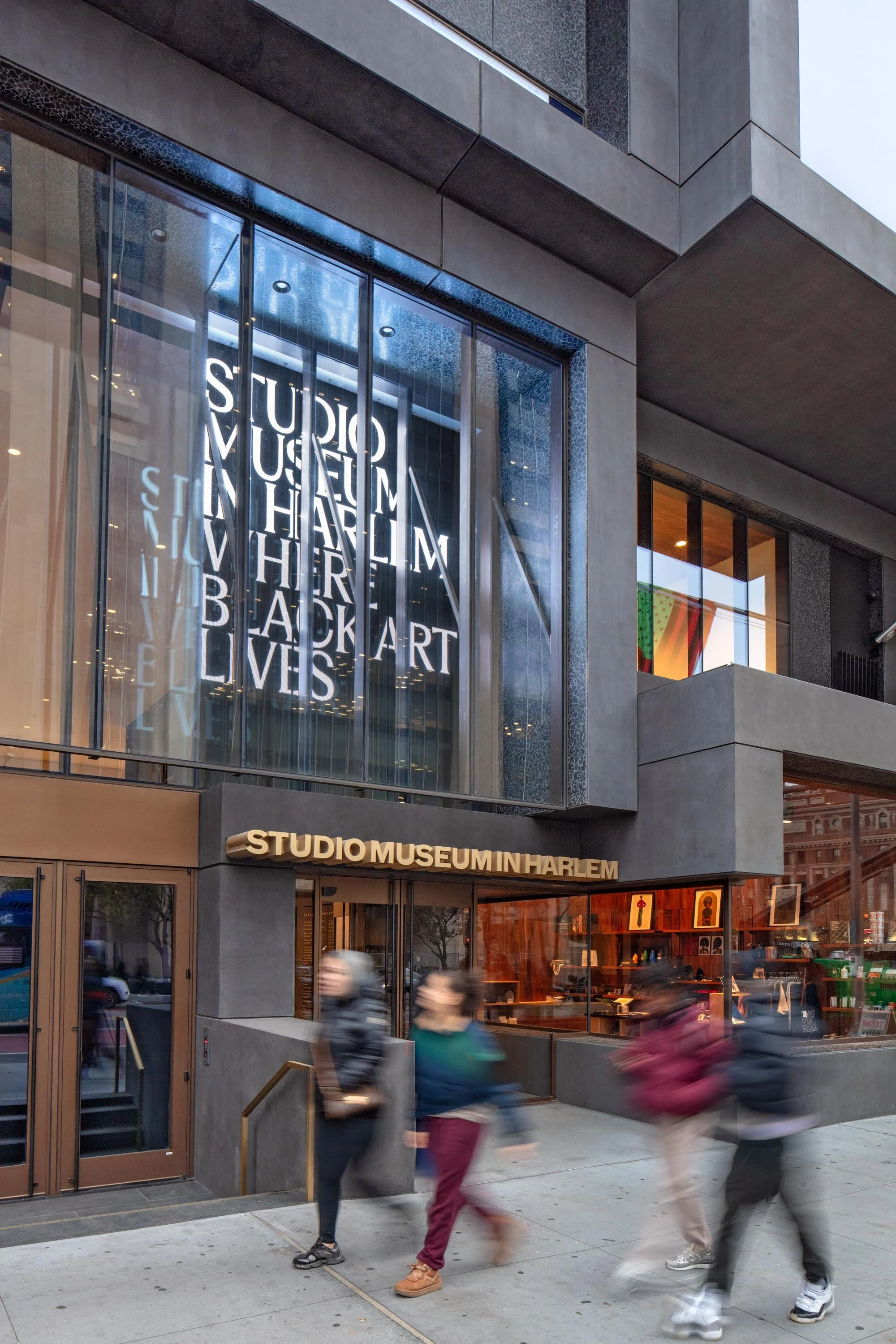
After eight years of transformation, the Museum reopened in November 2025 in a new home designed by Adjaye Associates with Cooper Robertson as executive architect. The building serves as both an architectural statement and an act of cultural preservation, deeply rooted in Harlem’s streetscape and community.
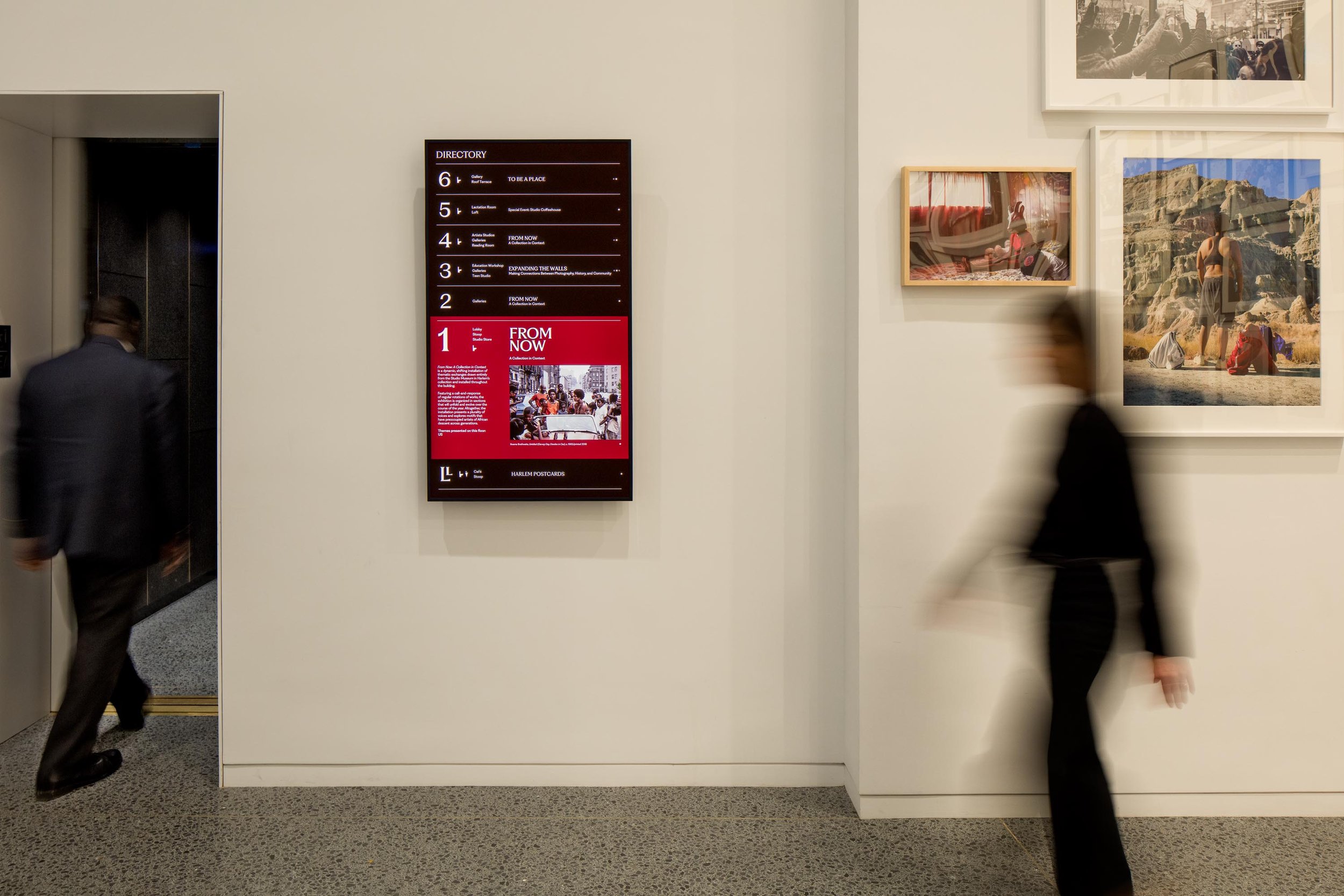
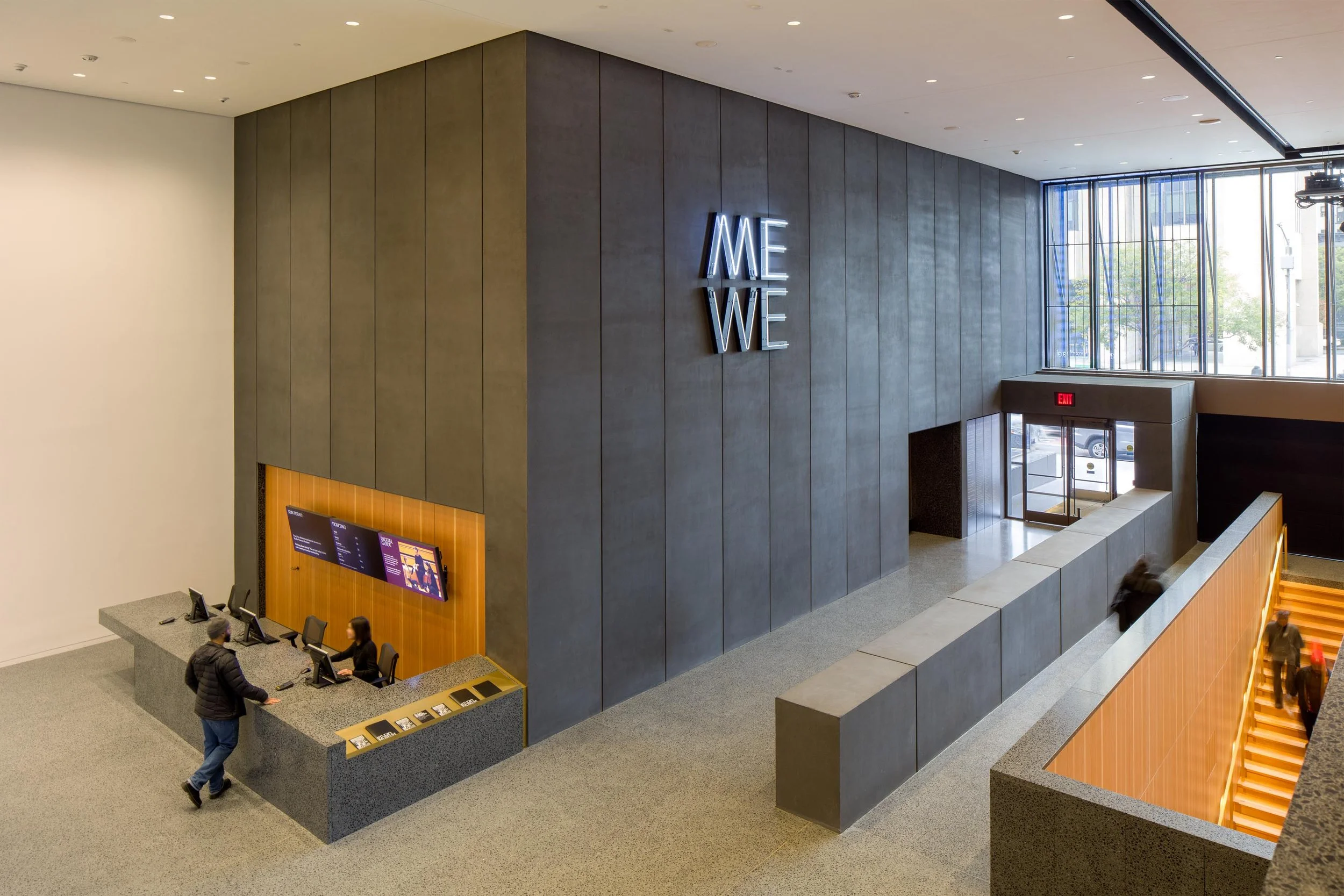
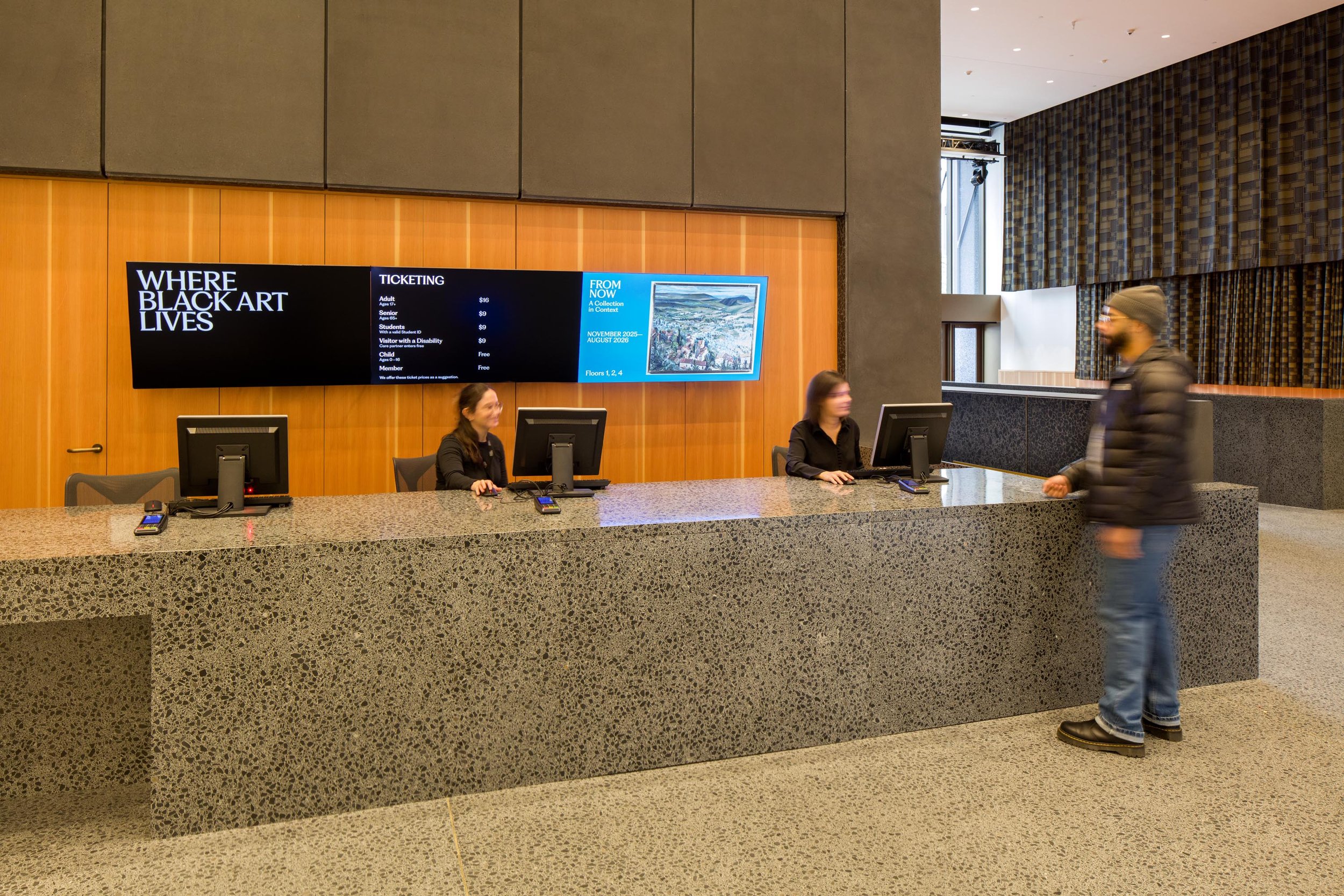
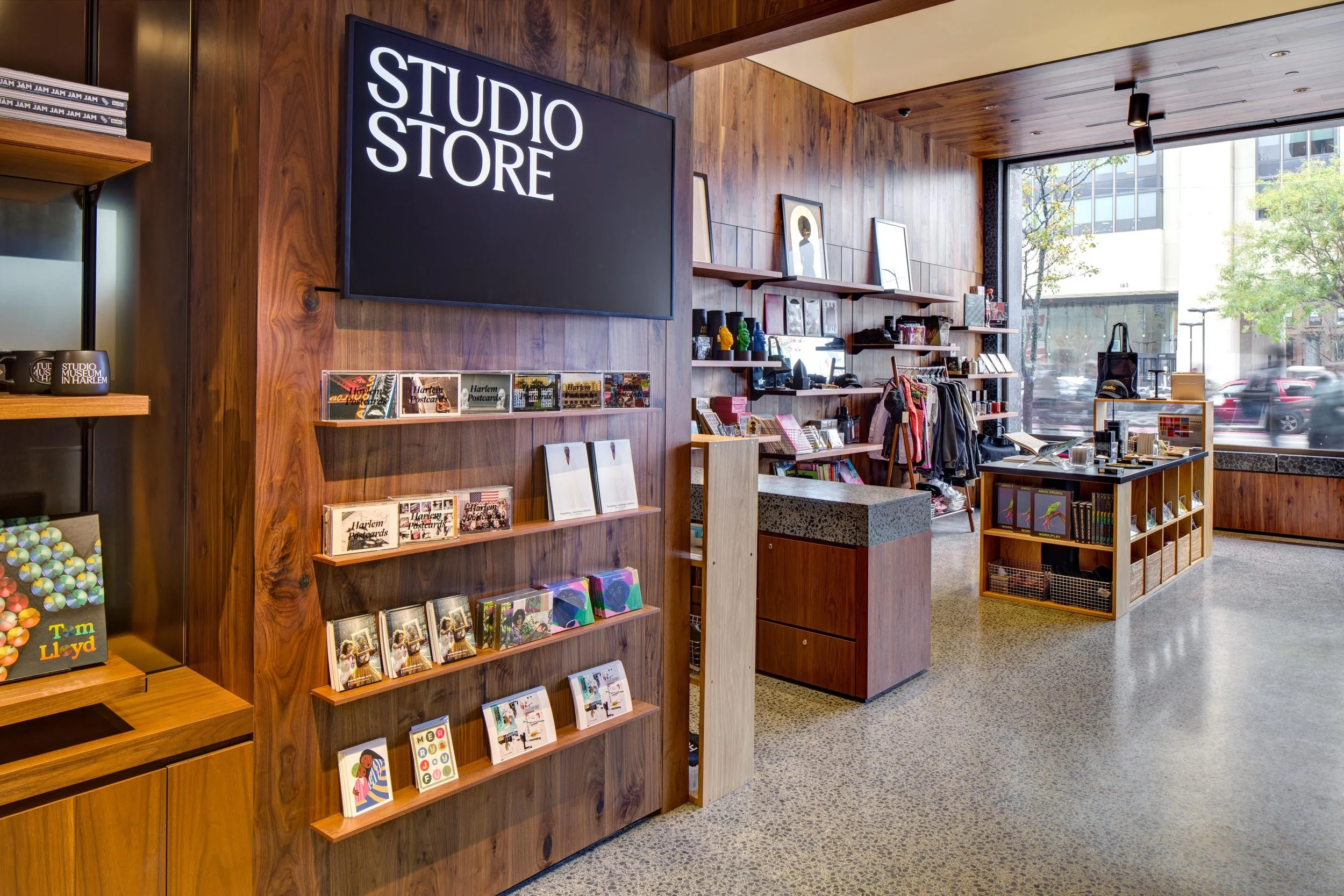
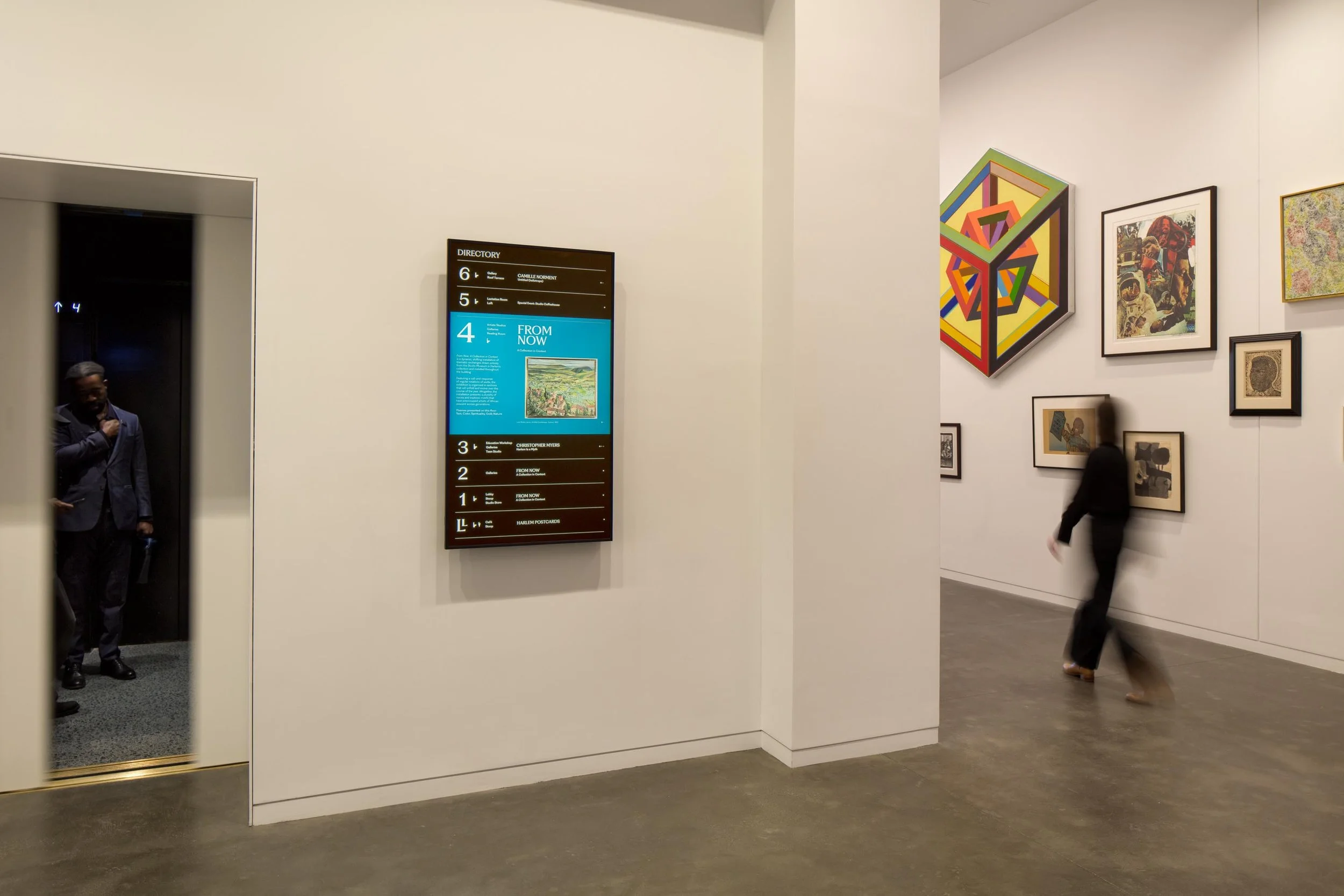
We were tasked to shape a cohesive digital signage strategy and create visual templates that would guide visitors throughout the building. Our work focused on how communication could meet visitors’ needs at different points in their journey while reinforcing the Museum’s mission and visual identity.
Design Strategy & Research
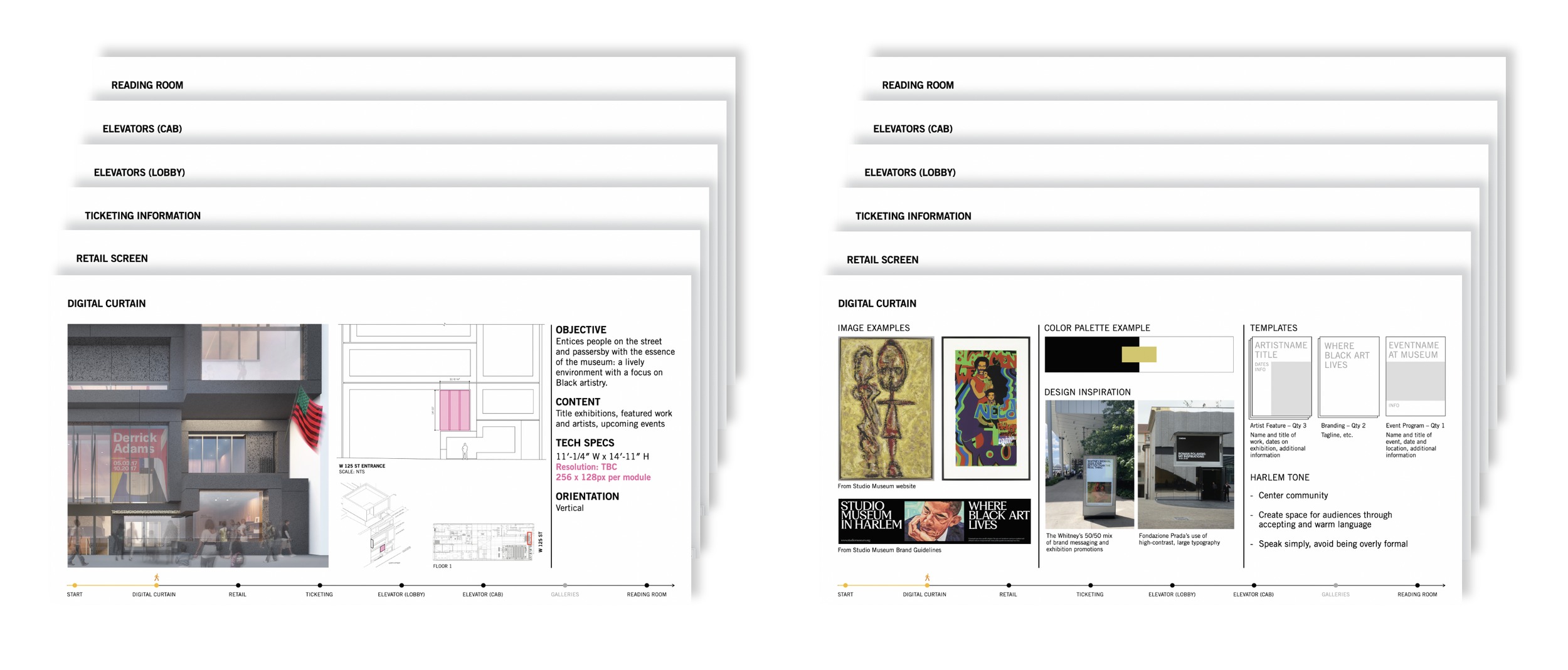
Through visitor experience analysis, communication review, and benchmarking against comparable institutions, we defined a framework for digital touchpoints that share exhibition information, program details, announcements, donor recognition, and wayfinding. Each template was built to align with the Museum’s brand and website standards, ensuring a consistent and intuitive experience. The result is a flexible system that empowers the Museum to manage evolving exhibitions and programs.
Concept:
Connections
The Studio Museum was founded out of necessity to create space for community to gather and celebrate Black artists, art, and culture. This concept pays homage to the vibrant community of Harlem and focuses its visual language on creating colorful, connecting threads that weave through the digital signage system.
brand activation
A black background provides a neutral stage that allows artwork and information to stand out, while selective color and horizontal motion create continuity with the Museum’s broader digital identity.
The motion language also incorporates the signature “chatter” animation from the Museum’s website, intentionally mirroring the dynamic community of Harlem. The result is a flexible yet distinctive system rooted in place, purpose, and cultural expression.
Grid activation
The visual language of the digital signage system draws directly from the Museum’s brand, architecture, and community. A three-column grid reflects the structural rhythm of the building, establishing consistency across all screens. Colorful linear “threads,” inspired by Harlem’s energy, introduces movement and helps guide the eye to important information.